

Absentee / Mail-in Voting
All states have some form of absentee or mail-in voting due to federal requirements. These voters normally include military and overseas citizens, voters with disabilities and students who reside in a different state. For example, absentee or mail-in ballots are sent to these military and overseas voters 45 days prior to federal elections. However, absentee or mail-in voting is often limited by states to a number of valid excuses based on age, absentee status or an inability to vote on Election Day.
Some states have a greater number of reasons and valid excuses to vote absentee ballots by mail or in-person in an election office. A number of states have no-excuse absentee or mail voting. Lastly, a number of states have implemented an entire method of mail-in balloting that includes return of ballots to secure boxes or by postal mail. Oregon instituted an all-mail-in balloting system in 1998 and other states like Washington and Colorado have instituted similar all mail ballot methods of voting.
Mail-in and absentee balloting provides certain vulnerabilities to the electoral system:
- One stated general purpose for no-excuse absentee or mail ballot voting is to increase convenience and reduce long lines on Election Day. However, “Election Day” has become “Election Month,” which has increased the overall costs of election administration. County election offices that must process a large number of mailed ballots will experience significant delays in releasing official election results. A month or more of voting dramatically increases the overall costs to political campaigns for poll watching and get-out-the-vote efforts prior to Election Day.
- Mail-in ballots are not cast in the secure polling place where precinct poll workers can confirm addresses and verify identification. A great deal of voter fraud and abuse of absentee and mail-in ballots has been documented across the country. Absentee or mail-in balloting may spur a short-term increase in turnout in local elections; however, there is no evidence that voting by mail increases overall turnout for the long term in general elections.
- Absentee or mail-in balloting requires the use of the U.S. Postal Service (USPS) to transmit and return the ballot. This often causes delays to the election office. Citizens in states that use mail-in ballots often authorize the return of ballots to secure mail boxes that voters can use if they distrust the postal service.
A number of states authorize or require in-person absentee voting with verification by voter ID, and some states require a voter ID at the time of absentee or mail-in ballot request or return.
Alternatively, many states that allow absentee or mail-in voting use signature comparison to verify the identity of the voter. Many believe that signature verification is error-prone and not uniformly implemented by election officials across the country. While signature verification does catch a small percentage of invalid ballots or voter fraud, the system often fails to identify a great many irregularities associated with absentee or mail-in voting. Alternatively, many argue that signature verification routinely disenfranchises thousands of voters when it is used to ferret out an invalid signature.
ACRU Commentary
News

Trump Threatens To Withhold Michigan Funding Over ‘Illegal’ Absentee Ballot Plan; MI Sec. State Responds
In a social media post Wednesday, President Trump threatened to withhold federal funding to Michigan for what he described as a “rogue Secretary of State” “illegally” sending absentee ballots to 7.7 million people — a claim prompted by Michigan Secretary of State Jocelyn Benson’s announcement of a plan to send absentee ballot applications to qualified Michigan voters.
USPS Mail Carrier Charged with Fraud After Allegedly Tampering with Vote-by-Mail Requests
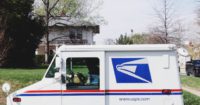
Federal and state prosecutors in West Virginia announced Tuesday that it they had charged a U.S. Postal Service mail carrier with attempted fraud for allegedly tampering with requests for vote-by-mail absentee ballots.

Texas vote-by-mail expansion blocked by state Supreme Court
Although the court sided with state Attorney General Ken Paxton's interpretation of what constitutes a disability, it indicated that it is up to voters to assess their health and determine if they meet the state's definition, which could allow them to vote by mail.

California mail ballots: tossing them from buildings would be just as secure
The number of registered voters is fluid. Voters move, they pass away, and in California, people can register to vote when applying for a driver’s license even if they are not citizens. Those residing in institutional settings are a revolving door of voters. Therefore, Governor Newsom’s directive to send a ballot to every “registered voter” is the opposite of vote integrity. The state’s GOP is suing to stop this travesty. We wish them the best in nipping this potential fraud in the bud.

Michigan math: Detroit has 30K more registered voters than eligible voters
A few weeks ago, ACRU named MI Governor Whitmer “Crisis Tyrant of the Week.” We could add “Vote Fraud Promoter of the Year” to her credentials. Whitmer is sending absentee ballot request forms to both legal MI voters AND 30,000 ineligible voters still on voting rolls in Detroit alone. The state has records of who moved and who died. It would be an easy place to start protecting real voters casting legal votes. Whitmer, so far, is a “no” on integrity measures.
When the mailman commits vote fraud
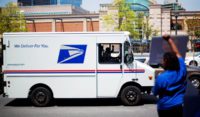
This story is the week’s best example of why universal mailed ballots are a welcome mat for fraud. After being caught changing ballot requests from Democrat to Republican, a West Virginia mailman claimed he did it as a “joke.” Charged with felony vote fraud, we presume Mailman Cooper will find his fines and/or jail time as unfunny as his crime.