

Voter ID
Requiring voters to prove they are who they say they are in order to cast a ballot is a simple, common-sense measure that helps ensure honest elections.
Opponents of photo ID falsely charge that such requirements discriminate against poor and minority voters. Each time this claim has been used in the courts, plaintiffs have failed to produce evidence of any individual who was actually denied the right to vote for lack of a photo ID. Despite this fact, and that all demographic groups including African-Americans support voter ID laws, accusations of Jim Crow, the racist system that disenfranchised Southern blacks for generations, continue to be hurled with abandon.
The Supreme Court has stated that because voter ID is free, the inconveniences of going to the Bureau of Motor Vehicles, gathering applicable documents, or posing for a photograph are not substantial burdens on most voters’ right to vote. Nor do they represent a significant increase over the usual burdens of voting — registering or driving to a polling place. If people show up without an ID, they can cast a provisional ballot and bring in their ID later.
The Supreme Court found that the interests in requiring voter ID are unquestionably relevant in protecting the integrity and reliability of the electoral process as part of a nationwide effort to improve and modernize election procedures criticized as antiquated and inefficient.
In Crawford v. Marion County Election Board (2008), the Supreme Court also noted the particular interest in preventing voter fraud in response to the problem of voter registration rolls with a large number of names of persons who are either deceased or no longer live in Indiana. While the trial record contained no evidence that “in-person voter impersonation at polling places had actually occurred in Indiana, such fraud had occurred in other parts of the country, and Indiana’s own experience with voter fraud in a 2003 mayoral primary demonstrates a real risk that voter fraud could affect a close election’s outcome.”
The Supreme Court noted that there was no question that the state had a legitimate and important interest in counting only eligible voters’ ballots. Lastly the Court noted that the state interest in protecting public confidence in elections also has independent importance because such voter confidence encourages citizen participation in the democratic process.
Using a photo ID for voting is a central recommendation from the bipartisan Commission on Federal Election Reform, headed by former President Jimmy Carter and former Secretary of State James Baker. Here’s what the commission’s official report says:
“A good registration list will ensure that citizens are only registered in one place, but election officials still need to make sure that the person arriving at a polling site is the same one that is named on the registration list. In the old days and in small towns where everyone knows each other, voters did not need to identify themselves. But in the United States, where 40 million people move each year, and in urban areas where some people do not even know the people living in their own apartment building let alone their precinct, some form of identification is needed.”
“The electoral system cannot inspire public confidence if no safeguards exist to deter or detect fraud or to confirm the identity of voters. Photo IDs currently are needed to board a plane, enter federal buildings, and cash a check. Voting is equally important.”
ACRU Commentary
News

A Guide to Photo ID, Early Voting and other Voting Law Cases
As the presidential election nears, a number of important voting law cases are still up in the air. And that can be confusing -- for voters trying to figure out what they do or don't need to cast their ballots, for election officials trying to figure out how to run elections, and for politicians trying to make sure supporters get out and vote. Here's a brief guide provided by National Public Radio via WAMU on where some of the big cases stand, as of the end of June. More rulings are expected, although courts are reluctant to make major voting law changes too close to Election Day. Referenced states are: North Carolina; Texas; Ohio; Wisconsin; Kansas; Virginia.

Texas City Official Avoids Jail in Vote Fraud case
A former Weslaco city commissioner has admitted to cheating to get re-elected in 2013. Lupe Rivera on July 11 pleaded guilty to a charge of unlawfully assisting a voter -- one of 16 counts he was charged with in a mail-in ballot fraud scheme. In exchange for the plea, prosecutors dropped the other 15 charges, which included failing to properly mark mail-in ballots and other counts of unlawfully assisting voters. Rivera was sentenced to one year probation and fined 500 dollars. The accusations had been brought by Rivera's challenger in that 2013 District 5 race, Letty Lopez, who had lost by just 16 votes. When a judge ordered a new election, Lopez defeated Rivera by 39 votes.
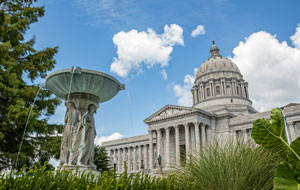
Missouri Governor Vetoes Voter Photo ID Bill
JEFFERSON CITY (July 7) -- A measure that would require a government-issued photo ID to vote was vetoed by Jay Nixon today, with the Democratic governor arguing it would act as a barrier against citizens' fundamental right to vote. It proved to be one of the most contentious items of debate during the 2016 legislative session, reflective of a broader ideological divide between Democrats and Republicans on voter access. GOP lawmakers argue the bill would prevent voter fraud, but their Democratic colleagues said it was a solution in search of a problem. Missouri Democrats fought the issue throughout session, eventually winning some compromises. Under the measure, voters without a photo ID can sign an affidavit at the polls, swearing they are who they say they are under penalty of perjury. Their vote then counts so long as their signature matches the one on file. Other provisions in the bill include exemptions for anyone born before 1946, anyone with a disability and those with religious objections to their photo being taken. Under the measure, the state also foots the bill for the IDs and any documents needed to get them.
ACRU Sues Broward County over Inflated Voter Rolls
Florida's Second Largest County Has More than 100 Percent of Residents Registered to Vote. ALEXANDRIA, VA (June 28, 2016) --- The (ACRU) has filed a lawsuit alleging that officials in Broward County, Florida, have violated federal election law by failing to maintain accurate voter registration. "When a county has more people registered to vote than there are eligible residents, it's an open door for vote fraud," said ACRU Chairman/CEO Susan A. Carleson. "Corrupted voter rolls are the first step to vote fraud. Broward's Supervisor of Elections, Dr. Brenda Snipes, is not using all of the tools available to keep Florida elections clean." The complaint, filed by the Public Interest Legal Foundation on ACRU's behalf on Monday, asks the U.S. District Court for the Southern District of Florida, Fort Lauderdale Division, to find Broward's supervisor of elections in violation of Section 8 of the National Voter Registration Act of 1993 (Motor Voter Law), "to implement reasonable and effective registration list maintenance," and to allow the ACRU to inspect voter records. The lawsuit notes that the county of nearly two million people, with a non-citizen population of 256,430, has removed only 18 people from the voting rolls over the last five years for lacking U.S. citizenship. Also, that 106 percent of county residents were registered to vote in 2010, and 103 percent in 2014. "Broward was one of four Florida counties that was asked to do a recount in the 2000 presidential election," Carleson said. "We think it's time they cleaned up their rolls before the next one." The case is and Andrea Frankel-Bellitto vs. Brenda Snipes. Andrea Frankel-Bellitto is a registered voter in Broward County. The ACRU is the only private party to successfully sue under Motor Voter to clean up county voter rolls, winning consent decrees in Texas and Mississippi.
Judge Upholds 3 States’ Proof of Citizenship for Voter Registration
Residents of Kansas, Georgia and Alabama will have to prove they are U.S. citizens when registering to vote for federal elections using a national form, a judge ruled Wednesday. U.S. District Judge Richard Leon sided against a coalition of voting rights groups that sued a U.S. elections official who changed the proof-of-citizenship requirements on the federal registration form at the request of the three states and without public notice. Residents of other states only need to swear that they are citizens, not show proof. Leon refused to issue a temporary injunction sought by voting rights advocates to overturn the move by Brian Newby, the executive director of the U.S. Election Assistance Commission, until the case can be decided on its merits at trial. No trial date has been set.
ACRU’s Complaint against Broward County, Florida
Sunshine State's Second Largest County Has More than 100 Percent of Residents Registered to Vote. ALEXANDRIA, VA (June 28, 2016) --- The (ACRU) has filed a lawsuit contending that officials in Broward County, Florida, have [...]