

News

Registering Voters at the DMV? What Could Go Wrong?
The 2014 Connecticut governor's race was decided by about 30,000 votes statewide. Four years earlier, the contest was decided by just about 6,000 votes. So it's a concern for state Rep. Arthur O'Neill, a Republican, that the Connecticut Department of Motor Vehicles--which recently misidentified more than 50,000 people for having unpaid taxes on their vehicles--will be in charge of voter registration. "If you misidentify 30,000 voters, that's more than enough to swing an election," O'Neill, deputy minority leader of the Connecticut House, told The Daily Signal in a phone interview. "As time goes by, and [the state] see[s] the difficulties and dangers of this, I hope they will at least postpone it," O'Neill said. "The DMV is still coping with regular duties of registering cars and issuing driver's licenses, which has been a catastrophe." The DMV has faced severe computer problems that have led to the tax mistakes, but also identifying vehicles and vehicle owners as living in the wrong town. Connecticut is changing its voting registration system largely in response to the Obama administration's threat to sue over what it calls the state's "widespread noncompliance" with the federal Motor Voter Act.

A Guide to Photo ID, Early Voting and other Voting Law Cases
As the presidential election nears, a number of important voting law cases are still up in the air. And that can be confusing -- for voters trying to figure out what they do or don't need to cast their ballots, for election officials trying to figure out how to run elections, and for politicians trying to make sure supporters get out and vote. Here's a brief guide provided by National Public Radio via WAMU on where some of the big cases stand, as of the end of June. More rulings are expected, although courts are reluctant to make major voting law changes too close to Election Day. Referenced states are: North Carolina; Texas; Ohio; Wisconsin; Kansas; Virginia.

Texas City Official Avoids Jail in Vote Fraud case
A former Weslaco city commissioner has admitted to cheating to get re-elected in 2013. Lupe Rivera on July 11 pleaded guilty to a charge of unlawfully assisting a voter -- one of 16 counts he was charged with in a mail-in ballot fraud scheme. In exchange for the plea, prosecutors dropped the other 15 charges, which included failing to properly mark mail-in ballots and other counts of unlawfully assisting voters. Rivera was sentenced to one year probation and fined 500 dollars. The accusations had been brought by Rivera's challenger in that 2013 District 5 race, Letty Lopez, who had lost by just 16 votes. When a judge ordered a new election, Lopez defeated Rivera by 39 votes.
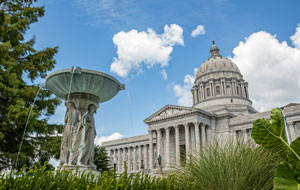
Missouri Governor Vetoes Voter Photo ID Bill
JEFFERSON CITY (July 7) -- A measure that would require a government-issued photo ID to vote was vetoed by Jay Nixon today, with the Democratic governor arguing it would act as a barrier against citizens' fundamental right to vote. It proved to be one of the most contentious items of debate during the 2016 legislative session, reflective of a broader ideological divide between Democrats and Republicans on voter access. GOP lawmakers argue the bill would prevent voter fraud, but their Democratic colleagues said it was a solution in search of a problem. Missouri Democrats fought the issue throughout session, eventually winning some compromises. Under the measure, voters without a photo ID can sign an affidavit at the polls, swearing they are who they say they are under penalty of perjury. Their vote then counts so long as their signature matches the one on file. Other provisions in the bill include exemptions for anyone born before 1946, anyone with a disability and those with religious objections to their photo being taken. Under the measure, the state also foots the bill for the IDs and any documents needed to get them.
ACRU Sues Broward County over Inflated Voter Rolls
Florida's Second Largest County Has More than 100 Percent of Residents Registered to Vote. ALEXANDRIA, VA (June 28, 2016) --- The (ACRU) has filed a lawsuit alleging that officials in Broward County, Florida, have violated federal election law by failing to maintain accurate voter registration. "When a county has more people registered to vote than there are eligible residents, it's an open door for vote fraud," said ACRU Chairman/CEO Susan A. Carleson. "Corrupted voter rolls are the first step to vote fraud. Broward's Supervisor of Elections, Dr. Brenda Snipes, is not using all of the tools available to keep Florida elections clean." The complaint, filed by the Public Interest Legal Foundation on ACRU's behalf on Monday, asks the U.S. District Court for the Southern District of Florida, Fort Lauderdale Division, to find Broward's supervisor of elections in violation of Section 8 of the National Voter Registration Act of 1993 (Motor Voter Law), "to implement reasonable and effective registration list maintenance," and to allow the ACRU to inspect voter records. The lawsuit notes that the county of nearly two million people, with a non-citizen population of 256,430, has removed only 18 people from the voting rolls over the last five years for lacking U.S. citizenship. Also, that 106 percent of county residents were registered to vote in 2010, and 103 percent in 2014. "Broward was one of four Florida counties that was asked to do a recount in the 2000 presidential election," Carleson said. "We think it's time they cleaned up their rolls before the next one." The case is and Andrea Frankel-Bellitto vs. Brenda Snipes. Andrea Frankel-Bellitto is a registered voter in Broward County. The ACRU is the only private party to successfully sue under Motor Voter to clean up county voter rolls, winning consent decrees in Texas and Mississippi.
Judge Upholds 3 States’ Proof of Citizenship for Voter Registration
Residents of Kansas, Georgia and Alabama will have to prove they are U.S. citizens when registering to vote for federal elections using a national form, a judge ruled Wednesday. U.S. District Judge Richard Leon sided against a coalition of voting rights groups that sued a U.S. elections official who changed the proof-of-citizenship requirements on the federal registration form at the request of the three states and without public notice. Residents of other states only need to swear that they are citizens, not show proof. Leon refused to issue a temporary injunction sought by voting rights advocates to overturn the move by Brian Newby, the executive director of the U.S. Election Assistance Commission, until the case can be decided on its merits at trial. No trial date has been set.
ACRU: Voter ID Opponents Try End Run Around Court’s Shelby Ruling
ALEXANDRIA, VA (June 20, 2016) --- Opponents of North Carolina's voter photo ID law wrongly sought to use an illegal interpretation of the Voting Rights Act to attack North Carolina's election integrity law, the (ACRU) argues in a brief filed on June 16 at the Fourth U.S. Circuit Court of Appeals. Regarding North Carolina State Conference of the NAACP, et al. v. Patrick L. McCrory, et al., the brief, notes that a U.S. District Court rightly rejected the plaintiffs' claim that the law violates Section 2 of the Voting Rights Act. In 2013, in Shelby County v. Holder, the U.S. Supreme Court struck down Section 5 of the Voting Rights Act, which had required Southern states and other jurisdictions to obtain preclearance from a D.C.-based court panel or from the U.S. Justice Department for any changes in districting or voting laws. The Court said the requirement was based on obsolete data and was no longer necessary, but left intact Section 2, which empowers the federal government to address discriminatory voting conditions in the states. In the current case, the plaintiff attempted to make a purely statistical case of disparate impact that the law discriminates against minorities. The plaintiffs sought to use hair-trigger standards to strike down state laws that the Supreme Court invalidated in Shelby County. "The appropriate standard is one that looks to the totality of the circumstances, as expressed in Section 2, and does not use statistical disparities between groups of voters to establish liability," the ACRU brief says. The District Court's ruling upholding the law "is consistent with traditional Section 2 jurisprudence, does not conflict with Shelby County, and preserves the constitutional balance between states and the federal government," the brief states. "The opponents of common-sense voter ID laws are attempting an end run around the Supreme Court," said Susan A. Carleson, Chairman/CEO of the ACRU. "The District Court got it right, and we are confident that North Carolina's law will stand in the appeals process."
Voter ID Laws Balance Risk of Fraud, Barring People from Polls
Voter ID laws are now active in 33 of the 50 U.S. states, covering about 60 percent of the population. Since President Barack Obama was elected in 2008, 11 states have enacted identification requirements for voting. The rules in those states range from strictly asking for photo IDs such as a driver's license to simpler documents such as a paycheck. Proponents say the laws prevent voter fraud and give the public more confidence in the process. "Voter ID can prevent and deter impersonation fraud, voting under fictitious voter registrations, double voting by individuals registered in more than one state, and voting by illegal aliens," Don Palmer, a former election official in Virginia and Florida, wrote in a Heritage Foundation report. Palmer argued that those who oppose the laws exaggerate the number of people who are affected, and that those assertions inhibit the national debate
Oregon Registers Thousands Under New ‘Motor Voter’ Law
PORTLAND -- Roughly 68,500 Oregonians have been automatically registered to vote under the state's new "motor voter" law, according to the Associated Press. That's an average 13,700 new voters a month through May, a big jump from the 2,000 per month Oregon typically saw before the automatic voter registration system kicked in Jan. 1. The program automatically registers people to vote when they apply for or renew a driver's license or state ID card, and on Friday state elections officials began rolling out its second and final phase. Phase two involves mailing registration paperwork to another 145,000 residents who interacted with the motor vehicle department in the two years before motor voter went into effect.
Group Asks Judge to Bar North Dakota Voter ID Law
FARGO -- A federal judge has been asked to temporarily block the enforcement of North Dakota's Voter Identification Law. The request was filed by attorneys who represent members of the Turtle Mountain Band of Chippewa. Earlier this year, they filed a lawsuit that claims North Dakota's voter ID requirements ''disproportionately burden and disenfranchise Native Americans.'' Court documents say an injunction would restore the right to cast ballots by signing an affidavit, or by a poll worker's personal knowledge of a voter's eligibility. Attorneys want the injunction to remain in force until the lawsuit is settled. North Dakota is the only state without voter registration. State law requires a driver's license, or tribal identification cards.