


ACRU Policy Board Member Col. Allen B. West expresses ACRU’s support for Texas lawsuit demanding state legislative authority over election protocols be upheld
 “The lawsuit filed by Texas against Michigan, Georgia, Pennsylvania, and Wisconsin is needed to protect the American electoral process from executive and judicial actions that usurp the constitutional powers of state legislators. ACRU encourages principled leaders across the country to join Texas in the fight against assaults on election integrity and the Constitution.”
Honestly conducted elections, with each American’s vote counting once, is the foundation of a nation whose Constitution begins “We the People…”
The government derives its legitimacy from free and fair elections and is bound by them. Vote fraud cuts at the very heart of American freedom. When an illegal vote is cast and counted, it cancels out the legal vote of a lawful citizen. (Watch the undercover videos).
In recent years, close elections and news of vote fraud have awakened Americans to the importance of protecting the integrity of the ballot box.
This site is a one-stop shop about voting requirements in every state, current state efforts to strengthen ballot integrity and the push-back from the Left.
Get involved — help prevent vote fraud from stealing your most precious civil right!
ACRU is dedicated to protecting seniors from vote fraud. Through our Protect Elderly Votes project, we created “Stranger Danger” to warn seniors and those caring for them to take steps to protect their ballots. If you suspect vote fraud, call ACRU’s Vote Fraud Hotline at 877-730-ACRU (2278). NEVER LET A STRANGER TOUCH YOUR BALLOT!
Listen to our new radio ads to learn more.
ACRU Commentary
Supreme Court Got It Wrong: Noncitizens Shouldn’t Be Counted
By Hans von Spakovsky and Elizabeth Slattery In a loss for voters, the Supreme Court has ruled unanimously against two residents of Texas who had argued that the Texas legislature diluted their votes when it used total population to redraw state Senate districts. In Evenwel v. Abbott, the Supreme Court allowed states to use total population in redrawing district lines, even though that this includes a large number of noncitizens (legal and illegal), felons, and others who are ineligible to vote. Sue Evenwel and Edward Pfenninger challenged the state Senate districts drawn by the Texas legislature using total population in 2013.They claimed that both the number of citizens of voting age and the number of registered voters in their districts deviated substantially--between 31 and 49 percent--from the "ideal" population of a Texas Senate district. They argued that this disparity significantly diluted their votes in comparison to those of voters who live in districts with large numbers of non-voters. According to this logic, their votes were worth roughly half those of voters in other districts. In other words, they claimed that their Senate districts had the same number of representatives as other districts that contained the same number of people but only half the number of eligible voters. This is a particular problem in Texas, which has almost two million illegal aliens, about seven percent of the state's population.
Heloise Gets It about How to Prevent Vote Fraud
The household advice column "Hints from Heloise" weighed in this week on the importance of accurate voter registration rolls: Dear Heloise: In 2012, my father died, and in 2014, I was still getting voter mailings in his name. I went to the voter-registration office in our town and had his name removed. I also checked when we went to vote to make sure his name was removed. I did the same last year for my mother. By doing this, no one can use their names to vote. - Nancy J. in North Carolina Dear Nancy: I am sorry about the loss of both of your parents in such a short time. Hopefully others reading this hint will keep this in mind. It's amazing how many dead people vote, in every state. The National Voter Registration Act of 1993 requires that every state "make reasonable efforts to remove persons who have died," but there is no set standard for doing this. Each state is different, so take the time to make sure a deceased person's name is no longer on the roll. Notify your voter-registration office yourself, and follow up when you go to vote. - Hugs, Heloise
Voter ID Laws Do Not Suppress the Vote
By Hans von Spakovsky Polls consistently show that Americans -- regardless of race or ethnicity -- agree that requiring identification to vote is a common-sense way to ensure the integrity of our elections. The repeated narrative pushed by critics that this "suppresses" votes is a myth. That claim has been disproven by the turnout results in states such as Georgia and Indiana, whose voter ID laws have been in place for years. In fact, these states experienced almost no problems despite apocalyptic predictions of opponents. The number of Americans who don't already have an ID is minuscule -- and every state with a voter ID law gives a free ID to anyone who can't afford one. Opponents who say there is no voter fraud are wrong. As the Supreme Court noted in 2008 when it upheld Indiana's photo ID law, we have a long, documented history of voter fraud in this country -- and it could make the difference in a close election. That is why states should also be requiring proof-of-citizenship to register to prevent non-citizens from illegally voting.
CBS Evening News Sounds the Alarm Playing the Race Card Against Voter ID Laws
Amidst their voluminous Super Tuesday 3 coverage, the CBS Evening News found just over two minutes to trot out the tired liberal argument that voter ID laws, like the one in North Carolina, have a racist angle. Anchor Scott Pelley set the scene from the start of the segment before correspondent Mark Strassamann took over by making it clear that it would be a left-leaning piece on the issue: "In North Carolina, about 1,000 voters cast provisional ballots because they didn't have enough identification to meet the state's new, strict voter ID law. The law was passed even though voter fraud is almost unknown there. Opponents say the law is meant to silence minority voters."
Non-Citizen Voting Case Pits Justice Department Against States that Require Proof-of-Citizenship
By Hans von Spakovsky The free-for-all boxing match between the U.S. Election Assistance Commission (EAC), the League of Women Voters, the NAACP, Kansas, and the U.S. Department of Justice (DOJ) resumed on Wednesday, March 9. They're tussling over the right of states to require proof-of-citizenship from people using the federal voter registration form. In Courtroom 18 of the D.C. federal courthouse, Judge Richard Leon presided over a sometimes contentious hearing on the plaintiffs' request for a preliminary injunction that would rescind the Election Assistance Commission's change of the instructions on the federal voter registration form to accommodate a request by Kansas. The Sunflower State wants the form to note that Kansans wishing to register must meet a proof-of-citizenship requirement. At the first hearing in this case on Feb. 22, Leon refused to grant a temporary restraining order requested by the League of Women Voters and the NAACP, the plaintiffs who don't want the Election Assistance Commission to mention proof-of-citizenship. Justice Department Unwilling to Defend Election Assistance Commission Normally, the Justice Department would be expected to defend the Election Assistance Commission in court. Instead, the Justice Department lawyers tried to throw the case by agreeing to a temporary restraining order. Leon expressed astonishment at the Department of Justice's behavior, calling it "unprecedented" and "extraordinary." Rather than take that as a warning about the Department of Justice's potentially unethical and unprofessional behavior in refusing to carry out its duty to defend its client, the Federal Programs Branch came into this week's hearing once again trying to lose the case.
Faulty Data Fuel Challenges to Voter ID Laws
By Don Palmer The use of photo identification to confirm the identity of voters serves an essential election security function in America's polling places and boosts citizens' confidence in the voting process. In perhaps their most prevalent means of attack, opponents of laws requiring photo ID greatly exaggerate the number of voters without a valid ID. In legislative, litigation, and public relations battles, opponents use wildly inflated numbers in an attempt both to portray these laws as burdensome and to gain partisan electoral advantage. They cite a highly inflated number of voters who do not possess a driver's license as the universal number of those who are not able to vote, even though, under all state photo ID laws, various other forms of ID, such as federal and state government IDs, U.S. passports, tribal IDs, or even employer-issued or university student IDs, are also acceptable.


Latest Election News
Men Admit To Skid Row Scheme Offering $1, Cigarettes For Fraudulent Voter Registration
“Four people admitted to offering homeless people money and cigarettes in exchange for false and forged signatures on ballot petitions and voter registration forms.” Five others are awaiting trial. The slap on the wrist the confessed fraudsters received through an LA court included community service. The last place these fraudsters need to be is in the community. Vote fraud is real, and it is organized.
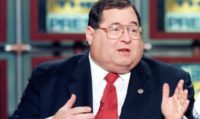
Nadler in 2004: ‘Paper Ballots Are Extremely Susceptible to Fraud’ – News Punch
New York Congressman Jerry Nadler in 2004: “Paper ballots are extremely susceptible to fraud. Just paper with no machines? I can show you experience which would make your head spin.” New York Congressman Jerry Nadler in 2020 (we are paraphrasing, but you get the gist): “Paper ballots now create their own paper trail.” The hypocrisy might be funny if we were not talking about voting, our most sacred right as Americans.

One of These is not Like the Other
There is a critical difference between an absentee ballot and the new notion of universal vote by mail. One is proven and safe, the other is subject to incompetent processing and open to fraud. Voters and elected officials must understand the enormous difference in order to protect the security our elections.
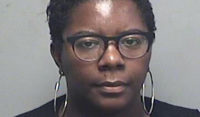
Award Winning Democrat Just Got Served With A Stack Of Felony Charges
The Democratic Party loves the “unconventional methods” of Michigan party official Sherikia Hawkins so much that they gave her an award. Her methods were so unusual that she was arrested on six felony charges. Hawkins engaged the community in voting by “forging records and falsely marking absentee ballots as invalid” during the 2018 midterm election.
Arizona’s Election Integrity Unit is a role model for other states
Arizona recently upped its game on election integrity with significant improvements to its Election Integrity Unit. These changes include an easy online election fraud reporting system, and aggressive action on any necessary litigation (including a recent double voting case.) We are grateful that Arizona is actively working to prevent fraud, not just waiting to address it after it happens.

PDF Download: Defending Honest Elections in America
